
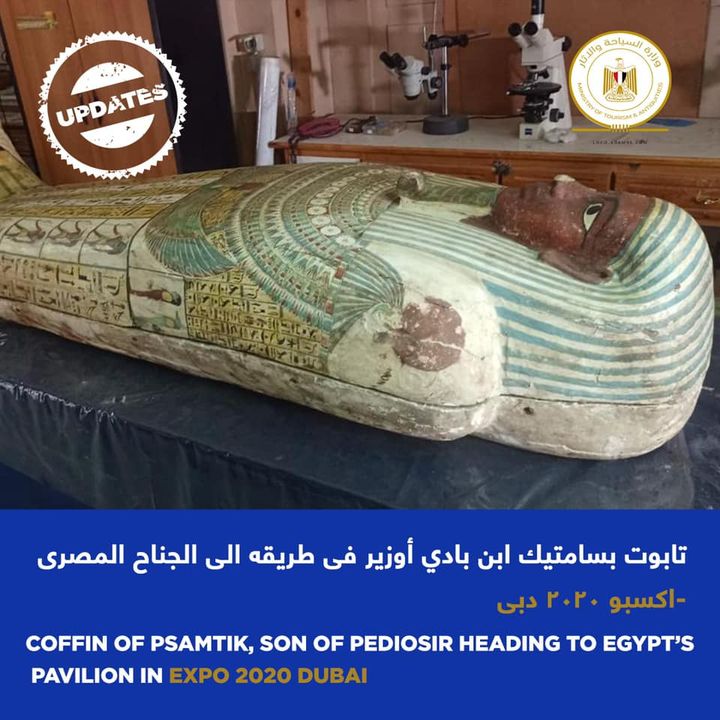
تابوت بسامتيك ابن بادي أوزير
ينسب التابوت إلى كاهن يُدعى بسماتيك ابن “بادي-أوزير”، والذي عثر عليه ضمن المقابر الجماعية بواسطة بعثة المجلس الأعلى للآثار من ناتج حفائر البوباسطيون بسقارة، وهو أحد التوابيت التي ربما كانت تخص كهنة الإلهة باستت وأسرهم.
اعتقد المصريون القدماء أنه يجب عليك أن تعيش حياة فاضلة وفقًا لمباديء ماعت (الحق والنظام والعدالة) من أجل حياة أبدية بعد الموت، ولكن يجب حماية الجسد أيضًا، ولذلك حنط المصريون القدماء الموتى ووضعوهم في توابيت. فقد كانت التوابيت الموطن الأبدي للموتى ولأرواحهم، و وكانت من أهم العناصر التي توضع فى مقابر القدماء المصريين، وفي نهاية عصر الدولة الحديثة (حوالي 1550-1069 قبل الميلاد)، بدأت التوابيت تأخذ دور المقابر من حيث أشكالها وزخارفها ونصوصها والتي يمكن أن يبعث فيها المتوفى من جديد.
هذا التابوت مصنوع من الخشب الملون “على شكل آدمي” مزين بقلادة كبيرة من الأزهار (الأُوْسِخ)، تنتهي برأسي صقر، ومن تحتها إلهة السماء (نوت) تنشر جناحيها وتحمل ريشة في كل يد (رمز الماعت). أما الجزء المركزي منقوش بنصوص القرابين ومحاط بصفين من الآلهة، وفي الأسفل تجسيدان للإله أنوبيس فى مقصورته وهما يواجهان المتوفى.
Coffin of Psamtik, Son of Pediosir heading to Egypt’s pavilion in Expo 2020 Dubai
Coffin of Psamtik, Son of Pediosir
The coffin belongs to a priest named Psamtik, the son of Pediosir. It was discovered in a group burial by the mission of the Supreme Council of Antiquities working at the Bubastieion in Saqqara. It is one of a collection of coffins that probably belonged to priests of the goddess Bastet and their families.
For a blessed everlasting life after death, the ancient Egyptians believed that you had to lead a virtuous life in accordance with the principles of Maat (truth, order, and justice). But the body had to be protected too. The ancient Egyptians thus embalmed the dead, and encased them in coffins. Coffins were the eternal home of the deceased and their soul, and the most important burial object for the ancient Egyptians, by the end of the New Kingdom (c.1550–1069 BC), coffins began to take on the role of the tomb, as their forms, texts, and images created spaces in which the dead could be reborn.
This painted wood anthropoid (“human-shaped”) coffin is decorated with a large floral wesekh-collar terminating in two falcon heads. Beneath this the sky goddess Nut spreads her wings and holds a feather in each hand, the symbol of Maat. The central section is inscribed with offering texts and speeches of gods flanked by two rows of gods. At the bottom, two figures of the god Anubis on his shrine face the deceased.


